Hello from the Central Coast of British Columbia! We are 3 weeks into our journey north and have arrived at our second resupply. The box we sent ahead was waiting for us as it was in Sayward, so after a shower, laundry and a little shopping we'll be on our way again. By distance we are more than halfway to Ketchikan but we still have budgeted another four weeks of paddling ahead.
So far we've had sun, fog, wind and rain, each in moderate amounts and with decent timing. It looks like more of the latter two this coming week so we may have to hunker down a few days, but then the sun will come out again and we'll dry off and move on.
Conditions on the water have ranged from dead calm to the expected currents, wind waves and swell. We are past several key cruxes including the rapids at Hole in the Wall, crossing Georgia and Queen Charlotte Straits, and most importantly Cape Caution. Still to come is some exposure around Campania and Dixon Entrance.
Wildlife sightings on the water have been abundant, from a pod of orcas passing nearby to countless humpback blows to seeing our first Pacific white-sided dolphins. We especially enjoy the playful sea otters and saw a raft of over a hundred. On land, we've seen fresh wolf tracks meters from our tent, mink, and no bears (yet). And in between, the intertidal zone teems with life and supplies entertainment at camp, like the starfish that never appears to be moving but is in a different place every time you look, or the hermit crabs racing around in their limpet shell hats.
The past few days we took a detour "outside" the Inside Passage to some island groups that were the most scenic we've been to on this trip or any other. In particular Serpent Island was a highlight, and was one of four nights where we had an entire island to ourselves. We've also shared beaches with other kayakers a few times, all of whom have been great company and several of whom we expect to see again.
For the most part our equipment and bodies are holding up well. We made a few adjustments in Powell River at their excellent repair cafe and used gear store; other issues have been addressable in the field with super glue, ibuprofen, and/or tape. The kayak will be heavier in this next section due to a longer distance between resupplies, which means extra challenge getting it in and out of the water and above the high tide line at night.
We have dozens if not hundreds of photos, some of which we might be able to add to our album from here but the internet access is spotty so here's a couple attached for now.
We'll check in again in Prince Rupert in a few weeks!
Greetings from the north coast of British Columbia!
Hello from Prince Rupert! When I wrote my previous message*, we had covered 400 (nautical) miles in our first three weeks. It therefore seemed overly cautious to pack another three weeks of supplies for only the next 200 miles, but we are sure glad we did, as the weather presented a series of challenges throughout this section.
Unlike our first two legs, where we paddled 20 out of 21 days, this leg started with a pattern of paddling for two days, then waiting out southerly rain and wind for another two days. Then two became three became four days on the west coast of Pitt Island while a northwesterly gale parked itself over Hecate Strait with 30 knot winds and 3 meter waves. The good news is northwesterlies come with sun, and our campsite was well protected, so we got that summer beach vacation in after all.
Being marooned for days at a time enabled us to interact with our surroundings in a different manner than just passing through on our way to a destination. We added sea urchin, miners lettuce and rockweed to our diet, which already included sea lettuce and the occasional ripe salmonberry we're able to get to before the competition (presumably bears). Our BC Marine Trail campsites received some brushing and improvements to their location markers that will hopefully benefit future paddlers. And if you've never watched the same sea anemone long enough to see it expel and then retract its stomach, you're missing out! We also had a lovely stay in Oona River, a small remote settlement that welcomed us into their community.
Throughout the weeks, the wildlife continued to provide new experiences. A gray whale came close enough to shore for us to see individual barnacles on its skin and the baleen inside its open mouth. After noticing fresh black bear tracks emerge from the sea near our camp, we saw one on the shore as we paddled away in our kayak. Multiple pods of orcas passed by, motivating the nearby sea lions to keep a watchful eye and stay in the shallows. Salmon spontaneously leap out of the water; we learned that if they skip they're sockeye, and those that flop down sideways are pinks. And although we enjoyed hearing wolf howls and seeing some from afar, a less positive encounter with a habituated wolf prompted our nighttime departure from Campania Island, with the silver lining being the bioluminescence that sparkled from every paddle stroke. Plus, now we have a unique rudder line stopper made from a seashell to replace the one on the dyneema line the wolf chewed off.
Our next and final leg to Ketchikan is looking like it'll be a similar waiting game with the wind. We've already seen Alaskan mountains on the horizon, so it feels very close, but we need to stay patient and wait for a calm window to cross Dixon Entrance. We're refreshing our chocolate supplies and reading materials and then will inch north and position ourselves to be ready whenever that window does arrive.
*It was a spur of the moment decision to send out an update as we were packing to leave Shearwater, and I missed including many of you who had expressed interest in our trip. I've copied that note below for context for those who didn't receive it. And for anyone who doesn't already have it, the link to our photos is
https://photos.app.goo.gl/P4kYf1CE9Liv2m4c6; only a few from this last leg have been uploaded so far.
Greetings from Alaska!
We arrived in Ketchikan on Monday and are boarding the ferry back to Bellingham today! In total, we saw more whales than people (outside of resupplies), ate 9 kg of banana chips (about 8 kg of them by Gabriel alone), and only needed 30 mL of sunscreen (and hardly at all until the last few days). Place names from the VHF forecast that once seemed impossibly far north are now all behind us; we'll get to revisit some on the way back and also see the inside channels we bypassed in favor of outer islands.
We feel incredibly fortunate to have been able to do this. There have been too many reminders recently of the scarcity of time we each have, and we are grateful that we could turn an idea of someday doing something into this and now. Thank you to everyone who helped, including the advice from those who've traveled up here before, care for our home while we've been gone, and general encouragement and enthusiasm.
Our last leg started out with a few foggy and damp days, which we used to zigzag through some islands northwest of Prince Rupert. We camped among rhinoceros auklet burrows and listened to their calls at night, explored nearby islets when they became connected at low spring tides, and in the final days enjoyed the best weather of the entire trip. After previous locations such as Gale and Foul Points showing us how they got their names, we had almost tropical experiences at the Gnarled Islands and Foggy Bay. When there's evening sun that dries out your gear, just enough breeze to have a light tailwind during the day and to keep the mosquitoes away at night, and a series of white sand beaches with ample camping options, one could almost imagine continuing on.
That said, we are ready to leave behind some of the daily discomforts, such as waking every time there's a rustle near our tent worrying it's a grizzly (especially Gabriel, who apologizes to all the deer he yelled "hey bear!" at before shining his headlamp into their eyes) or putting on a cold damp wetsuit while being swarmed by no-see-ums (especially Rachel, who apologizes to no one for her reactions during this process, as she strongly believes that temperatures requiring 4 layers of clothing should be mutually exclusive with the presence of biting insects). Much of the fun has been Type II. Humpbacks are cool but less so when they're breathing down your back in dense fog, or between you and the shore when you're trying to round Cape Caution in swell above your head. Bioluminescence is amazing when it's generated from your paddle in otherwise glassy water, but less so when you start seeing it on whitecaps as the wind picks up and there's no landing spots nearby. The richness of the intertidal zone has been truly eye-opening, but hauling our boat and gear up seaweed-covered rocks after a long day of paddling to account for six meter tides has not agreed with my lower back. We have gained even more respect for those who have done this route solo, with heavier gear, with less precise weather forecasts, without modern navigation tools, and/or with longer itineraries.
The rain has just started again, and the ferry is about to board, so it's time to wrap up and head home. Thanks again for all the support. We're looking forward to catching up with all of you when we return!

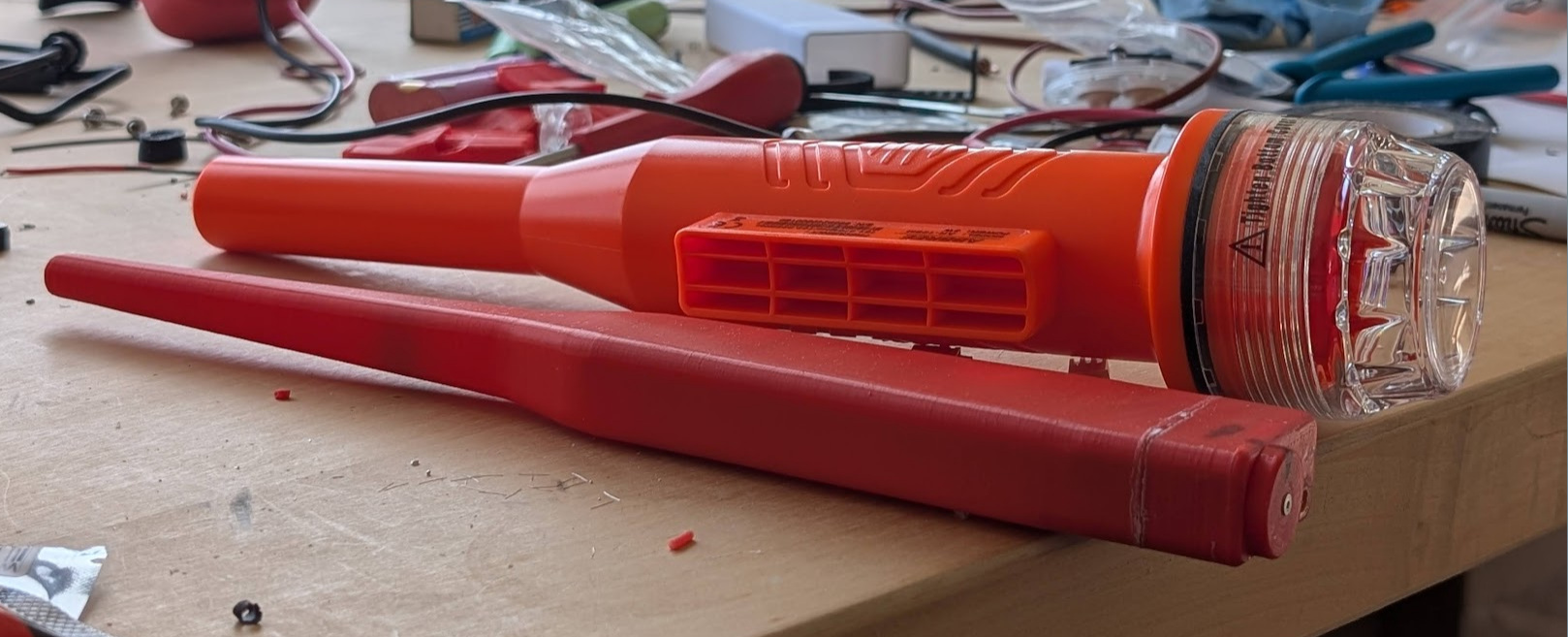 AIS transmitter: We transmitted our position using a modified Socotran / Abree AR-109M net finder. The modification is a slimmer and lighter housing (fitting a PFD pocket), and a smaller battery to save weight and bulk. A tiny 300mah 2S battery still lasted about 3-4 days of full-day use. The stock 2x18650 pack should be good for a week of non-stop transmission at least. Programming was done using the python script at https://github.com/speters/rs109m. Range turned out well too, with marinetraffic and vesselfinder both showing tracks well offshore. They had fairly complete coverage up to Queen Charlotte Strait, near Bella Bella, and then from Prince Rupert to Ketchikan. Other boaters reported seeing us on their nav screens, but then struggling to see us on the water from the distance, expecting a much larger boat.